Energy Efficiency in Existing Properties:
SPACT Supports the Optimization of Building A03 at Creative Campus Monheim
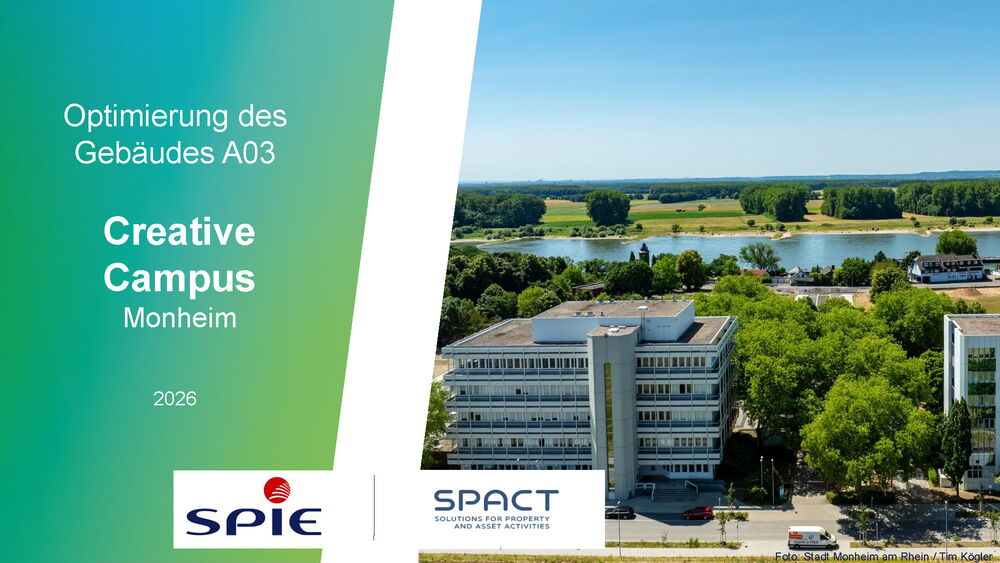



At Creative Campus Monheim, Building A03 is undergoing a comprehensive technical and energy-efficiency upgrade.
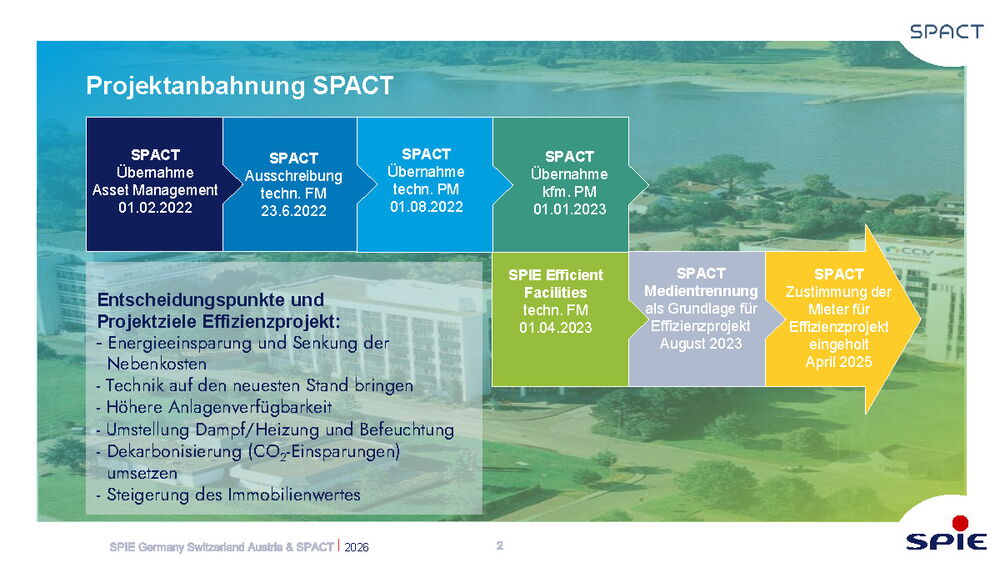
SPACT has supported the project across several phases — from asset management and technical property management to commercial property management and the coordination of tenant approval for the efficiency project.
The objective is clear: to bring the building’s technical infrastructure up to a modern standard, increase system availability, reduce service charges and operate the property in a more sustainable and economically efficient way over the long term.
Upgrade During Ongoing Laboratory Operations
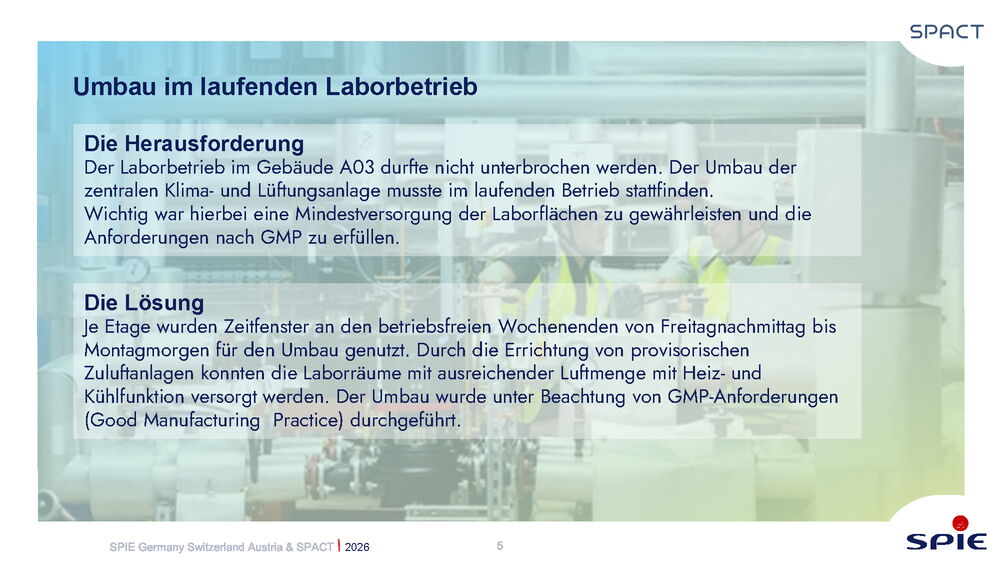
A key challenge of the project was that laboratory operations in Building A03 could not be interrupted. The conversion of the central air-conditioning and ventilation systems therefore had to take place while the building remained in operation.
At the same time, a minimum supply of air, heating and cooling for the laboratory areas had to be maintained, while also meeting GMP requirements — Good Manufacturing Practice.
To achieve this, the work was carried out floor by floor during non-operational weekend time slots, from Friday afternoon to Monday morning. Temporary supply air systems ensured that the laboratory rooms continued to receive sufficient air volume, including heating and cooling functionality, throughout the conversion phases.
Key Measures of the Energy Efficiency Upgrade
The project focuses on several technical optimization measures:
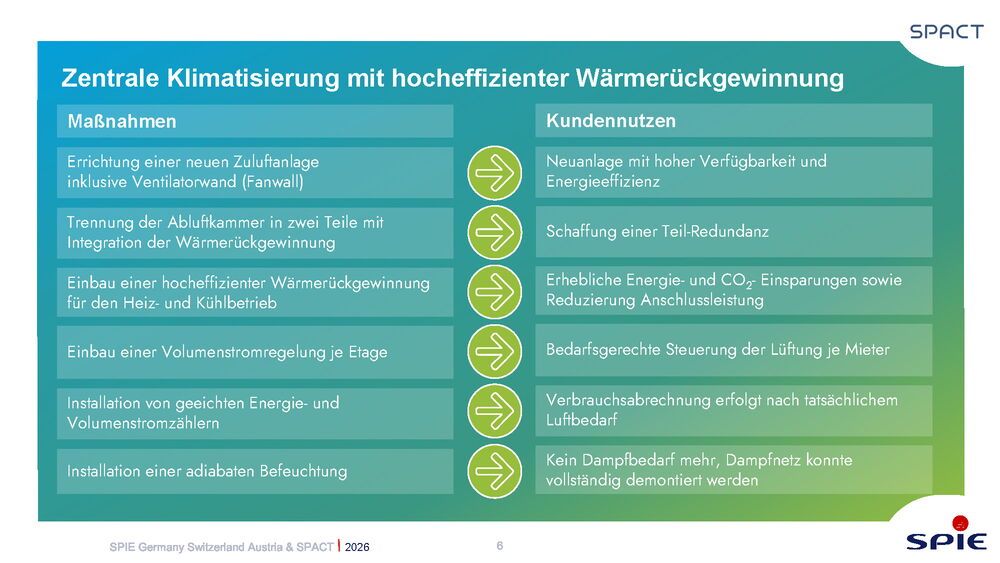
- central air-conditioning with highly efficient heat recovery
- new supply air system including fan wall
- volume flow control for each floor
- calibrated energy and volume flow meters
- hydraulic optimization of the heating system
- new high-efficiency pumps
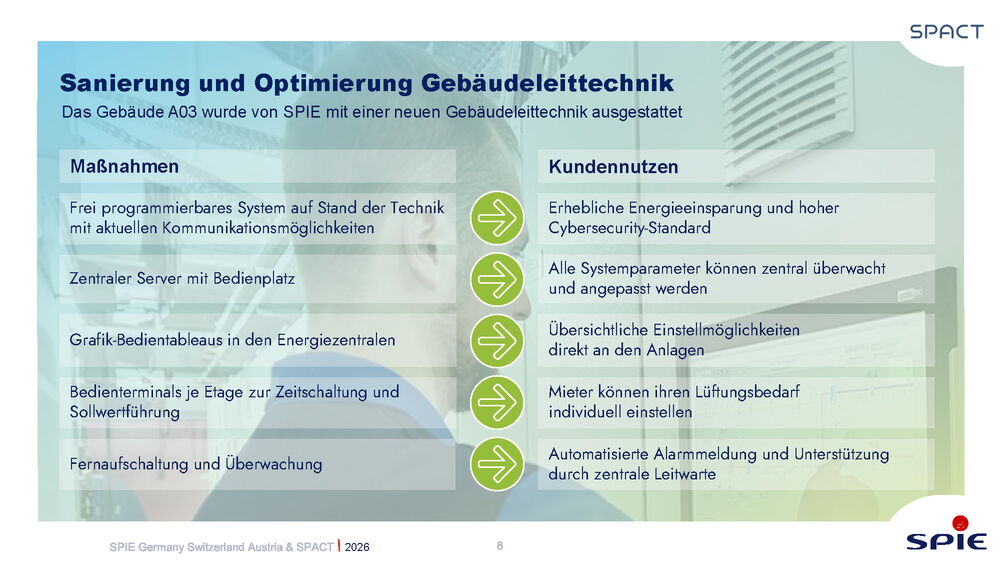
- modernization and optimization of the building management system
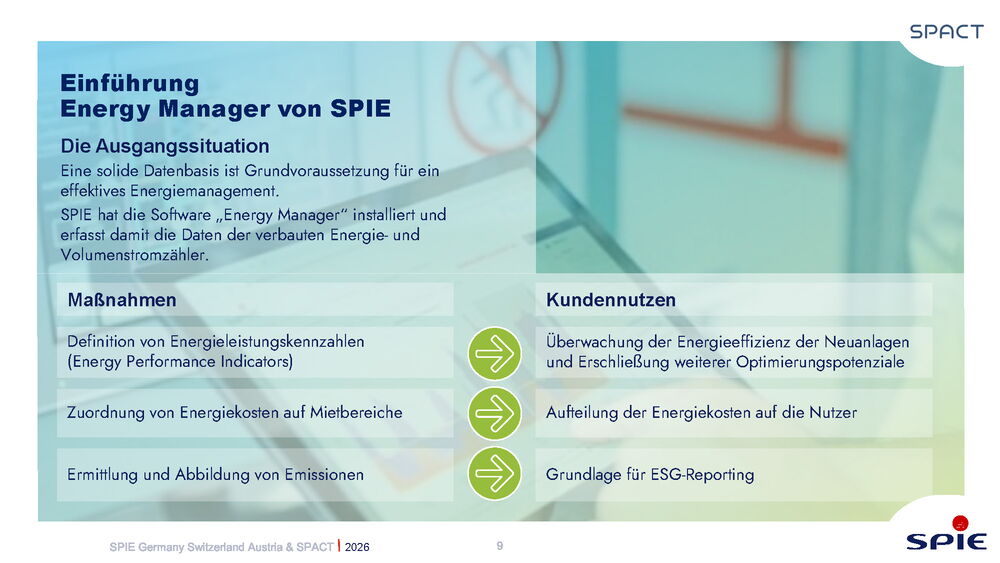
- implementation of the SPIE Energy Manager
- recording of energy consumption, emissions and energy performance indicators
A particularly relevant benefit for both tenants and operators is the ability to control ventilation more precisely according to demand. In addition, energy costs can be allocated more transparently to individual tenant areas based on actual usage.
Significant Savings in Energy, CO₂ and Operating Costs
The measures deliver substantial savings potential. According to the project documentation, total energy costs are expected to be reduced by around 70 percent. Heating energy is reduced by 82 percent, electricity consumption by 43 percent, and the previous steam demand is eliminated entirely.
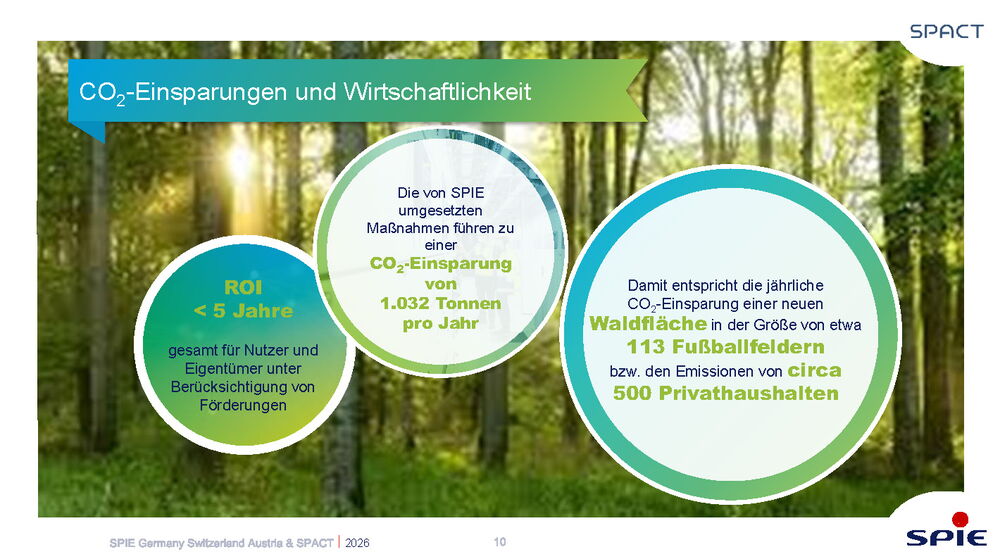
The ecological impact is also significant: the measures are expected to save around 1,032 tonnes of CO₂ per year. The project’s return on investment is stated at less than five years, taking subsidies and the combined benefits for users and owners into account.
Sustainable Value Creation Through Technical Asset Management
The project demonstrates how technical optimization, ESG requirements and long-term real estate strategy can be combined effectively. The modernization of the building technology not only reduces energy consumption, but also creates greater transparency in operation, higher system availability, improved control options and a reliable data basis for future energy management and ESG reporting.
For SPACT, the project is a strong example of how existing properties can be technically upgraded, economically stabilized and sustainably enhanced through structured asset and property management.